.svg)

The Complete Guide to Recurring Invoicing: Everything Businesses Need to Know
Meta Description:
Learn how recurring invoicing works, its benefits, common challenges, best practices, and how ZionPe Billing helps businesses automate subscription and recurring payments.
The Complete Guide to Recurring Invoicing
Managing invoices manually can quickly become a challenge as your business grows. Whether you run a SaaS company, consulting agency, membership platform, digital service business, or subscription-based organization, sending the same invoices every month wastes time and increases the risk of errors.
This is where recurring invoicing becomes essential.
Recurring invoicing allows businesses to automate invoice creation and delivery on a predefined schedule. Instead of manually generating invoices every billing cycle, businesses can set up recurring billing rules and let the system handle the process automatically.
In today’s subscription-driven economy, recurring invoicing has become a critical part of financial operations. Companies that automate their billing processes often improve cash flow, reduce administrative work, and provide a better customer experience.
In this complete guide, you’ll learn everything about recurring invoicing, how it works, its benefits, common challenges, best practices, and how ZionPe Billing helps businesses streamline recurring billing operations.
Table of Contents
1. What Is Recurring Invoicing?
2. How Recurring Invoicing Works
3. Why Businesses Use Recurring Invoicing
4. Industries That Benefit from Recurring Invoicing
5. Manual vs Automated Recurring Invoicing
6. Key Features of a Recurring Invoicing System
7. Benefits of Recurring Invoicing
8. Common Challenges in Recurring Billing
9. Best Practices for Managing Recurring Invoices
10. How ZionPe Billing Simplifies Recurring Invoicing
11. Frequently Asked Questions
12. Conclusion
What Is Recurring Invoicing?
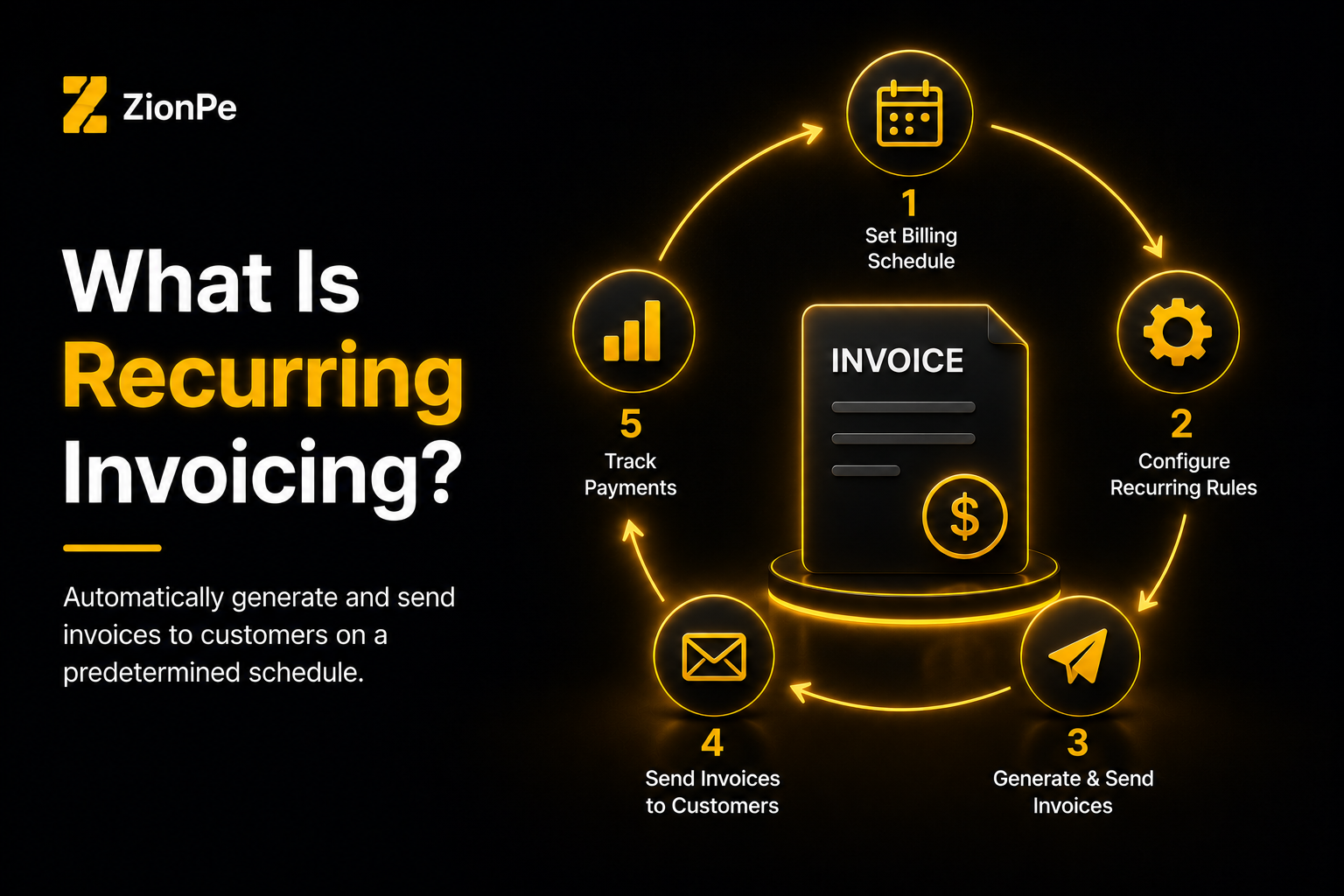
Recurring invoicing is the process of automatically generating and sending invoices to customers on a predetermined schedule.
Instead of creating invoices manually every week, month, quarter, or year, businesses configure recurring billing rules once and allow the system to handle future invoices automatically.
For example:
· A SaaS company charges customers every month.
· A marketing agency invoices clients on the first day of each month.
· A membership organization collects annual membership fees.
· A web hosting provider bills customers every quarter.
In all these cases, recurring invoicing removes repetitive manual work and ensures invoices are sent consistently.
The process helps businesses maintain predictable revenue streams while reducing administrative overhead.
How Recurring Invoicing Works
Recurring invoicing follows a straightforward process.
Step 1: Create a Billing Schedule
The business defines:
· Invoice frequency
· Due dates
· Billing amount
· Tax settings
· Customer information
Step 2: Configure Recurring Rules
The system stores the billing schedule and automatically creates invoices according to the defined rules.
Common billing intervals include:
· Weekly
· Monthly
· Quarterly
· Semi-annually
· Annually
Step 3: Generate Invoices Automatically
When the billing date arrives, invoices are automatically generated.
Step 4: Send Invoices to Customers
Customers receive invoices through email or customer portals.
Step 5: Track Payments
The billing platform records payment status and provides visibility into:
· Paid invoices
· Unpaid invoices
· Overdue invoices
· Failed payment attempts
This automation significantly reduces manual administrative work.
Why Businesses Use Recurring Invoicing
Modern businesses prioritize efficiency.
Manually creating hundreds of invoices every month creates several problems:
· Increased labor costs
· Human errors
· Missed billing cycles
· Delayed revenue collection
· Poor customer experience
Recurring invoicing solves these challenges by automating repetitive tasks.
Businesses gain:
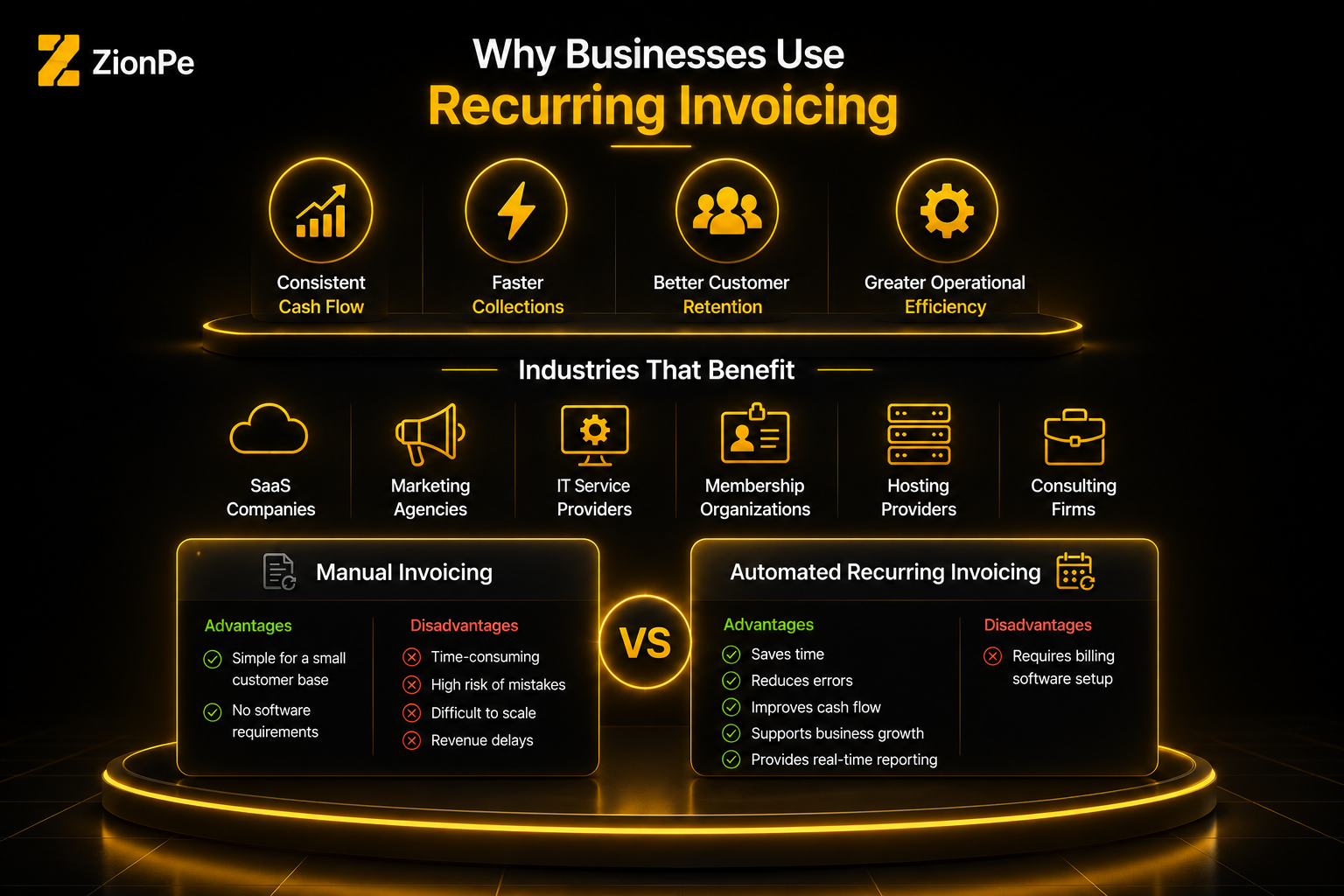
· Consistent cash flow
· Faster collections
· Better customer retention
· Greater operational efficiency
As businesses scale, recurring invoicing becomes less of a convenience and more of a necessity.
Industries That Benefit from Recurring Invoicing
Recurring invoicing is useful across numerous industries.
SaaS Companies
Software companies typically charge subscription fees monthly or annually.
Recurring invoicing ensures customers receive invoices automatically without manual intervention.
Marketing Agencies
Agencies often work on monthly retainers.
Recurring invoices simplify billing for ongoing services.
IT Service Providers
Managed service providers frequently bill customers on fixed monthly contracts.
Automated invoicing reduces administrative workload.
Membership Organizations
Membership clubs, professional associations, and educational organizations rely heavily on recurring billing.
Hosting Providers
Web hosting businesses commonly use monthly and annual billing cycles.
Recurring invoicing ensures uninterrupted service and predictable revenue.
Consulting Firms
Consultants with ongoing retainers can automate recurring invoices to improve cash flow.
Manual vs Automated Recurring Invoicing
Many businesses start with manual invoicing.
However, this approach becomes inefficient as customer numbers grow.
Manual Invoicing
Advantages:
· Simple for a small customer base
· No software requirements
Disadvantages:
· Time-consuming
· High risk of mistakes
· Difficult to scale
· Revenue delays
Automated Recurring Invoicing
Advantages:
· Saves time
· Reduces errors
· Improves cash flow
· Supports business growth
· Provides real-time reporting
Disadvantages:
· Requires billing software setup
For most growing businesses, automated invoicing delivers significantly greater long-term value.
Key Features of a Recurring Invoicing System
Not all invoicing platforms offer the same capabilities.
Businesses should look for the following features.
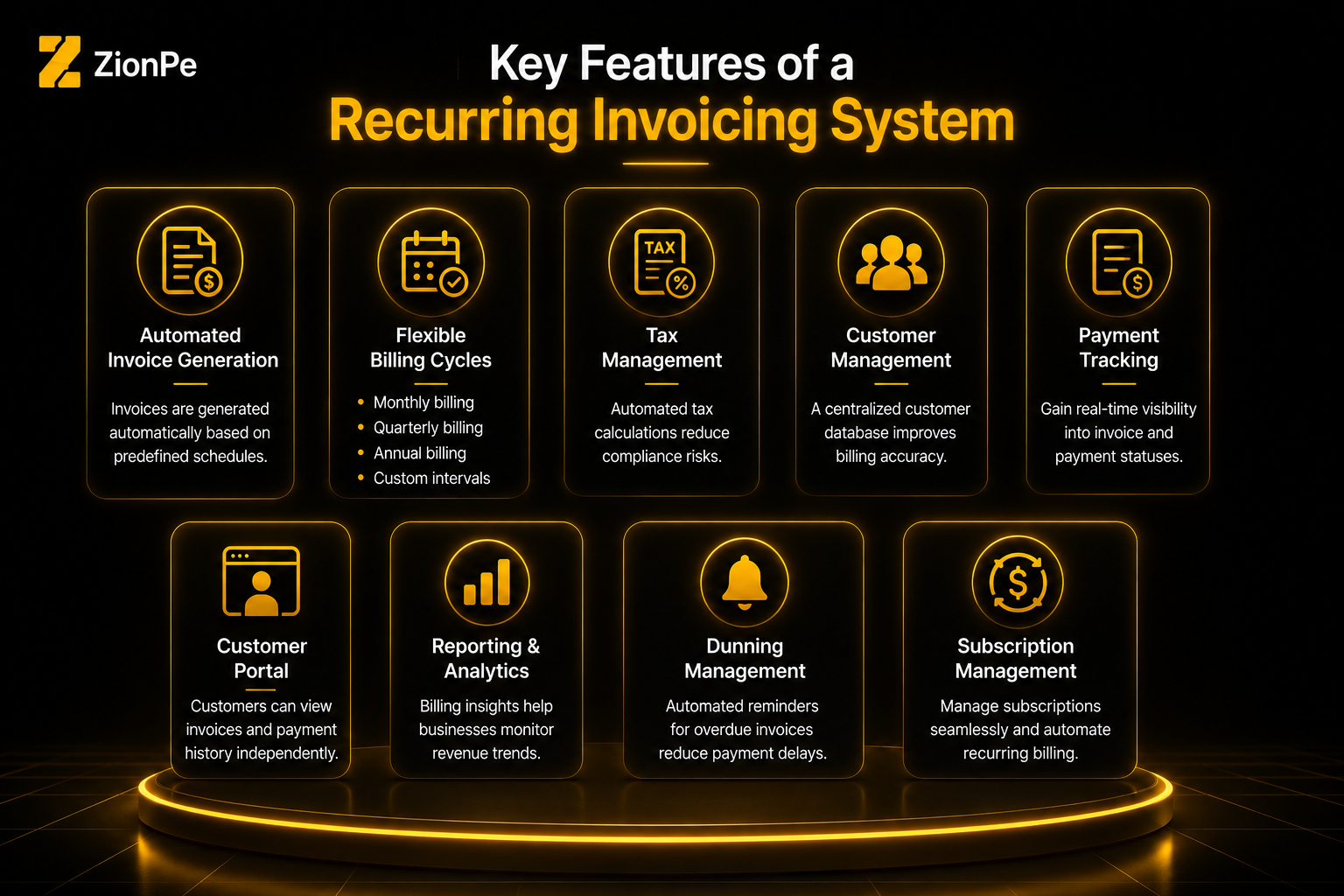
Automated Invoice Generation
Invoices should be generated automatically based on predefined schedules.
Flexible Billing Cycles
Support for:
· Monthly billing
· Quarterly billing
· Annual billing
· Custom billing intervals
Tax Management
Automated tax calculations reduce compliance risks.
Customer Management
A centralized customer database improves billing accuracy.
Payment Tracking
Businesses need visibility into invoice and payment statuses.
Customer Portal
Customers should be able to view invoices and payment history independently.
Reporting and Analytics
Billing insights help businesses monitor revenue trends.
Dunning Management
Automated reminders for overdue invoices help reduce payment delays.
Subscription Management
Recurring invoicing becomes even more powerful when combined with subscription management capabilities.
Benefits of Recurring Invoicing
Improved Cash Flow Predictability
Predictable invoicing leads to predictable revenue.
Businesses can forecast future income more accurately.
Reduced Administrative Work
Teams spend less time generating invoices and following up manually.
Better Customer Experience
Customers receive invoices consistently and on time.
This improves trust and professionalism.
Faster Business Growth
Automated billing allows businesses to serve more customers without increasing administrative resources.
Reduced Human Error
Automation minimizes mistakes caused by manual data entry.
Better Financial Visibility
Businesses gain access to real-time billing and revenue insights.
Increased Revenue Retention
Automated reminders and billing workflows reduce missed payments.
Common Challenges in Recurring Billing
Despite its benefits, recurring billing can present challenges if not managed properly.
Failed Payments
Expired cards and insufficient funds can interrupt billing cycles.
Billing Errors
Incorrect pricing configurations can create customer disputes.
Subscription Changes
Customers may upgrade, downgrade, pause, or cancel services.
Billing systems must handle these changes efficiently.
Tax Compliance
Different regions may have varying tax requirements.
Revenue Recognition
Businesses need accurate revenue tracking for accounting purposes.
The right billing platform helps address these challenges through automation and visibility.
Best Practices for Managing Recurring Invoices
Automate Wherever Possible
Automation reduces manual effort and improves consistency.
Offer Multiple Payment Methods
Providing payment flexibility can improve payment success rates.
Monitor Failed Payments
Act quickly when payment failures occur.
Automated recovery workflows can significantly improve collections.
Review Billing Rules Regularly
Ensure pricing, taxes, and customer information remain accurate.
Communicate Clearly with Customers
Customers should understand:
· Billing schedules
· Renewal dates
· Payment terms
· Cancellation policies
Track Key Metrics
Monitor:
· Monthly Recurring Revenue (MRR)
· Annual Recurring Revenue (ARR)
· Churn Rate
· Customer Lifetime Value (LTV)
These metrics provide valuable insights into business performance.
How ZionPe Billing Simplifies Recurring Invoicing
As businesses scale, managing recurring invoices manually becomes increasingly difficult.
ZionPe Billing was designed to help businesses automate and optimize their billing operations.
The platform provides a comprehensive billing infrastructure that supports recurring invoicing, subscription management, revenue tracking, and customer lifecycle management.
With ZionPe Billing, businesses can:
Create Recurring Billing Schedules
Set up monthly, quarterly, annual, or custom billing intervals with ease.
Automate Invoice Generation
Invoices are generated automatically according to predefined billing rules.
Manage Customer Subscriptions
Track customer plans, upgrades, downgrades, renewals, and cancellations from a centralized platform.
Handle Dunning and Failed Payments
Automated payment recovery workflows help reduce revenue loss.
Access Customer Self-Service Portals
Customers can manage invoices, subscriptions, and payment details independently.
Gain Revenue Insights
Track:
· MRR
· ARR
· Churn
· LTV
· Revenue growth
through built-in analytics.
Support Multiple Payment Gateways
ZionPe Billing is designed as a flexible billing engine that works with various payment gateways, allowing businesses to choose the payment infrastructure that best suits their needs.
Whether you’re running a SaaS company, agency, hosting business, membership platform, or subscription-based service, ZionPe Billing helps simplify recurring invoicing while supporting long-term growth.
Frequently Asked Questions
What is recurring invoicing?
Recurring invoicing is the automated generation and delivery of invoices on a predefined schedule.
Who should use recurring invoicing?
Any business that charges customers regularly can benefit from recurring invoicing, including SaaS companies, agencies, consultants, hosting providers, and membership organizations.
What is the difference between recurring invoicing and subscription billing?
Recurring invoicing focuses on automated invoice generation.
Subscription billing includes recurring invoicing along with subscription management, upgrades, downgrades, renewals, and customer lifecycle management.
Can recurring invoicing improve cash flow?
Yes.
Consistent billing schedules improve payment collection and create more predictable revenue streams.
Does ZionPe Billing support recurring invoicing?
Yes.
ZionPe Billing provides automated recurring invoicing, subscription management, dunning workflows, analytics, customer portals, and flexible payment gateway integrations.
Conclusion
Recurring invoicing has become an essential component of modern business operations.
Businesses that continue to rely on manual invoicing often face unnecessary administrative costs, billing errors, delayed payments, and scalability challenges.
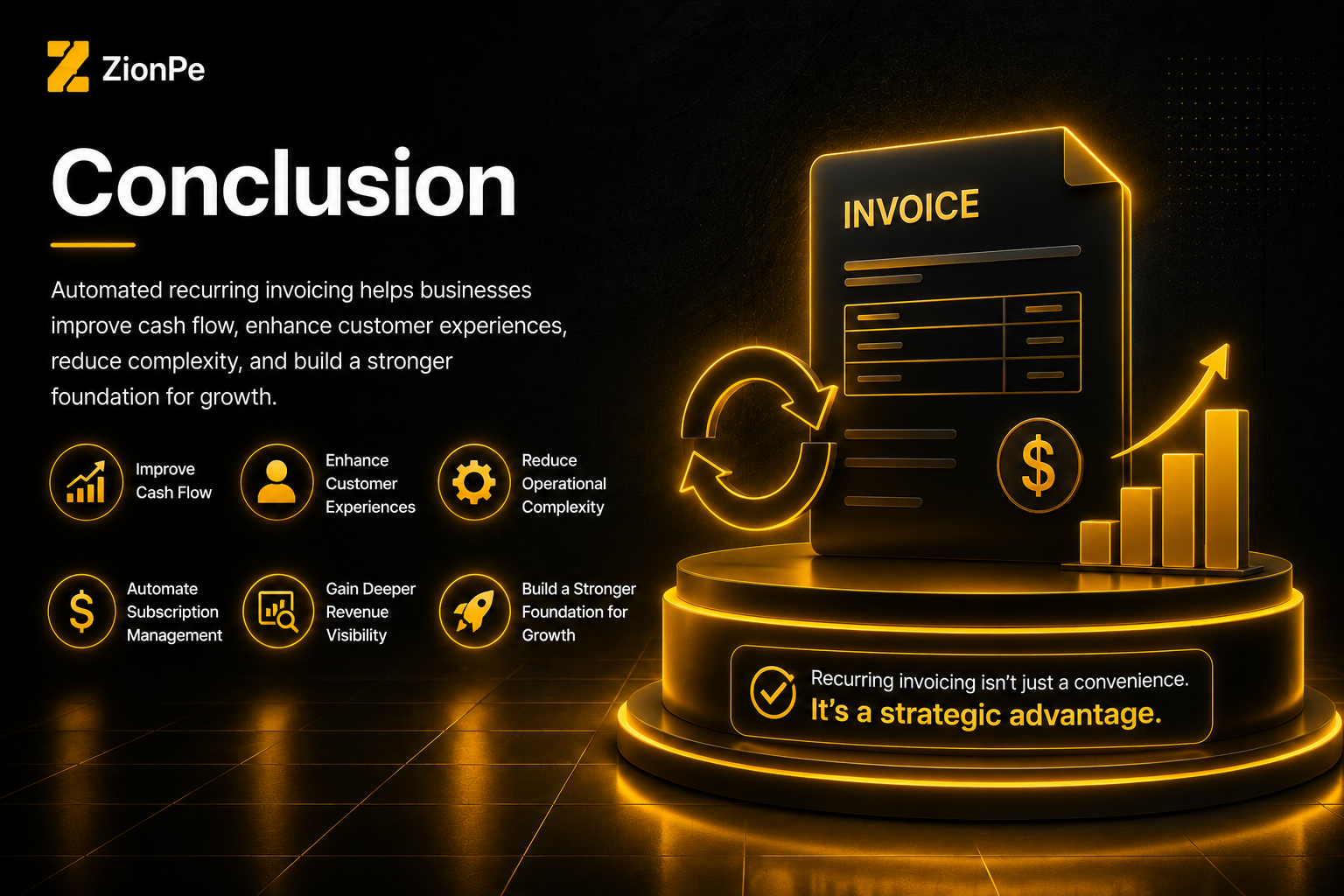
By implementing automated recurring invoicing, businesses can improve cash flow, enhance customer experiences, reduce operational complexity, and create a stronger foundation for growth.
For organizations looking to streamline billing operations, automate subscription management, and gain deeper visibility into recurring revenue, ZionPe Billing provides the tools needed to manage the entire billing lifecycle efficiently.
As recurring revenue models continue to grow across industries, investing in a robust recurring invoicing solution is no longer just a convenience. It is a strategic advantage.