.svg)
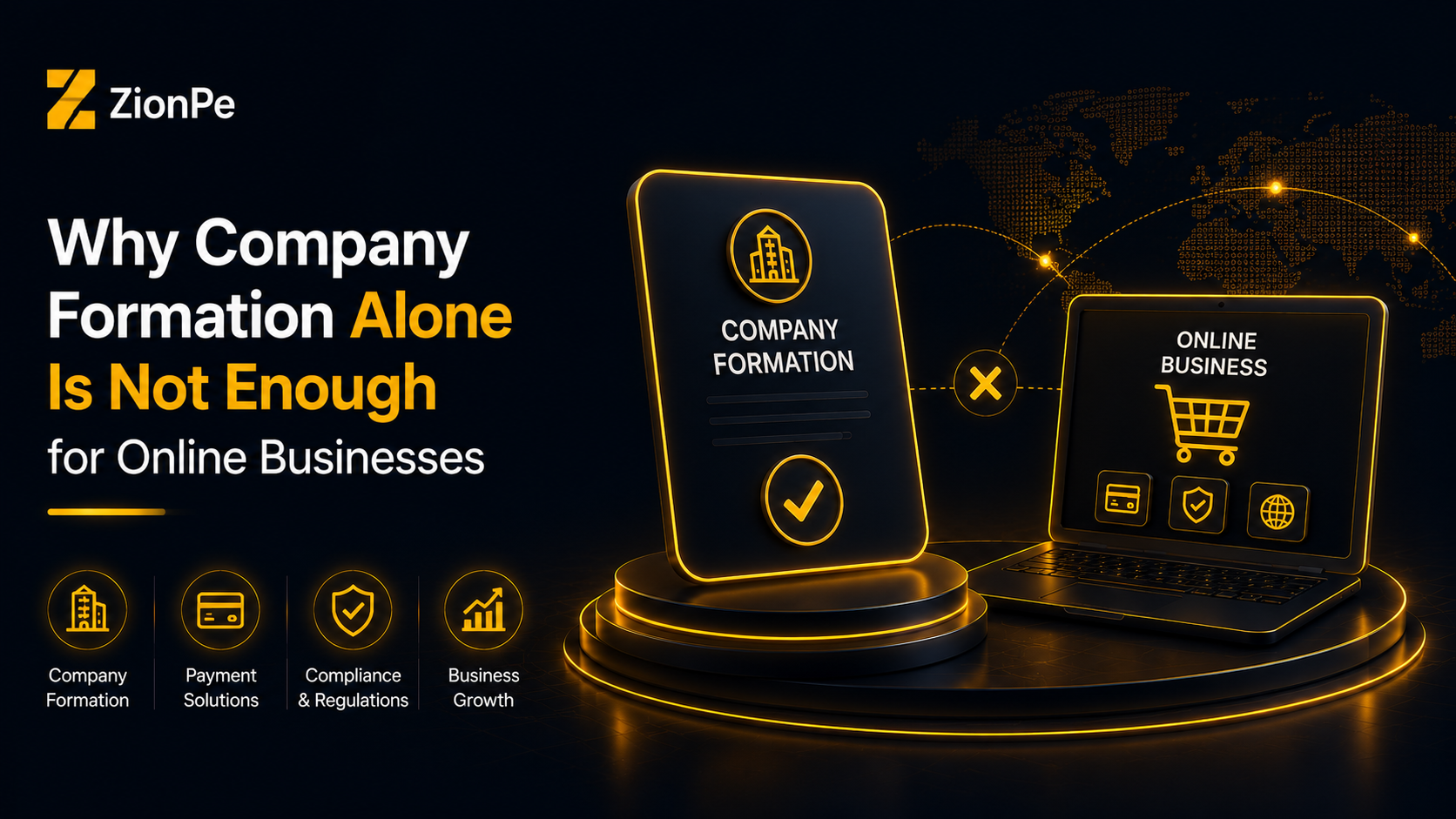

Registering a company is often seen as the “finish line” for starting a business. In reality, for online businesses, it’s only the starting point. Thousands of founders successfully form companies every year yet many struggle to generate revenue, accept payments, or operate smoothly because they stop at registration.
In today’s digital economy, company formation alone is not enough. Online businesses need payments, compliance, operational tools, and global readiness from day one. This article explains why registration by itself falls short, what online businesses actually need to operate, and how platforms like ZionPe help bridge the gap between legal setup and real-world business execution.
Table of Contents
- The Common Misconception About Company Formation
- Why Online Businesses Are Different
- Registration vs Operational Readiness
- Missing Piece #1: Payment Gateway Access
- Missing Piece #2: Ability to Get Paid Internationally
- Missing Piece #3: Invoicing and Payment Collection
- Missing Piece #4: Compliance and Verification
- Missing Piece #5: E-Commerce & Website Integrations
- Real-World Problems Caused by “Formation-Only” Setup
- How ZionPe Fills the Gap Beyond Company Formation
- Who This Matters Most For
- Final Thoughts
1. The Common Misconception About Company Formation
Many founders believe:
“Once my company is registered, I’m ready to do business.”
This assumption made sense years ago, when businesses were local and transactions were mostly offline. But online businesses operate very differently. Registration gives you a legal identity, not a working business.
Without the ability to accept payments, invoice clients, or operate globally, a registered company remains inactive.
2. Why Online Businesses Are Different
Online businesses are:
- Borderless
- Payment-dependent
- Digital-first
- Often global from day one
Unlike traditional businesses, online companies:
- Sell to international customers
- Rely on card payments and online checkout
- Need instant payment confirmation
- Face strict platform and compliance rules
This means operational tools matter just as much as legal setup.
3. Registration vs Operational Readiness
Let’s separate the two:
What Company Formation Gives You
- Legal entity
- Registration documents
- Company name and structure
What It Does NOT Give You
- Ability to accept online payments
- Payment gateway approval
- Invoicing tools
- Global transaction support
- Operational cash flow
Online businesses need both to function.
4. Missing Piece #1: Payment Gateway Access
A company without a payment gateway cannot:
- Accept card payments
- Sell online
- Invoice clients efficiently
Many founders form companies and only later realize:
- Popular gateways reject their business
- Country restrictions apply
- Approval takes months
This delays revenue and damages momentum.
5. Missing Piece #2: Ability to Get Paid Internationally
Online businesses rarely serve one country.
Without international payment support:
- Clients struggle to pay
- Deals fall through
- Businesses rely on slow bank transfers
A modern online business must be able to collect payments globally, not just locally.
6. Missing Piece #3: Invoicing and Payment Collection
Most service-based businesses rely on:
- Invoices
- Milestone payments
- Retainers
If invoicing is manual or disconnected from payments:
- Payments are delayed
- Follow-ups increase
- Cash flow becomes unpredictable
Online invoicing with built-in payments is essential—not optional.
7. Missing Piece #4: Compliance and Verification
Payment platforms operate under strict regulations:
- KYC (Know Your Customer)
- AML (Anti-Money Laundering)
- PCI-DSS (card security standards)
If a company is formed without compliance readiness:
- Accounts may be frozen
- Payments delayed
- Businesses flagged as high risk
Compliance must be part of setup not an afterthought.
8. Missing Piece #5: E-Commerce & Website Integrations
Online businesses often need:
- WooCommerce checkout
- Custom Checkout API
- Embedded payment buttons
Company formation alone does not provide:
- Checkout systems
- Website integrations
- Payment tracking dashboards
These tools turn a website into a revenue engine.
9. Real-World Problems Caused by “Formation-Only” Setup
Founders who stop at registration often face:
- Clients asking “How do I pay you?”
- Payment gateway rejections
- Months of waiting to get paid
- Reliance on personal accounts
- Compliance issues later
These problems are avoidable with the right approach.
10. How ZionPe Fills the Gap Beyond Company Formation
ZionPe is built on a simple idea:
A business is only ready when it can operate and get paid.
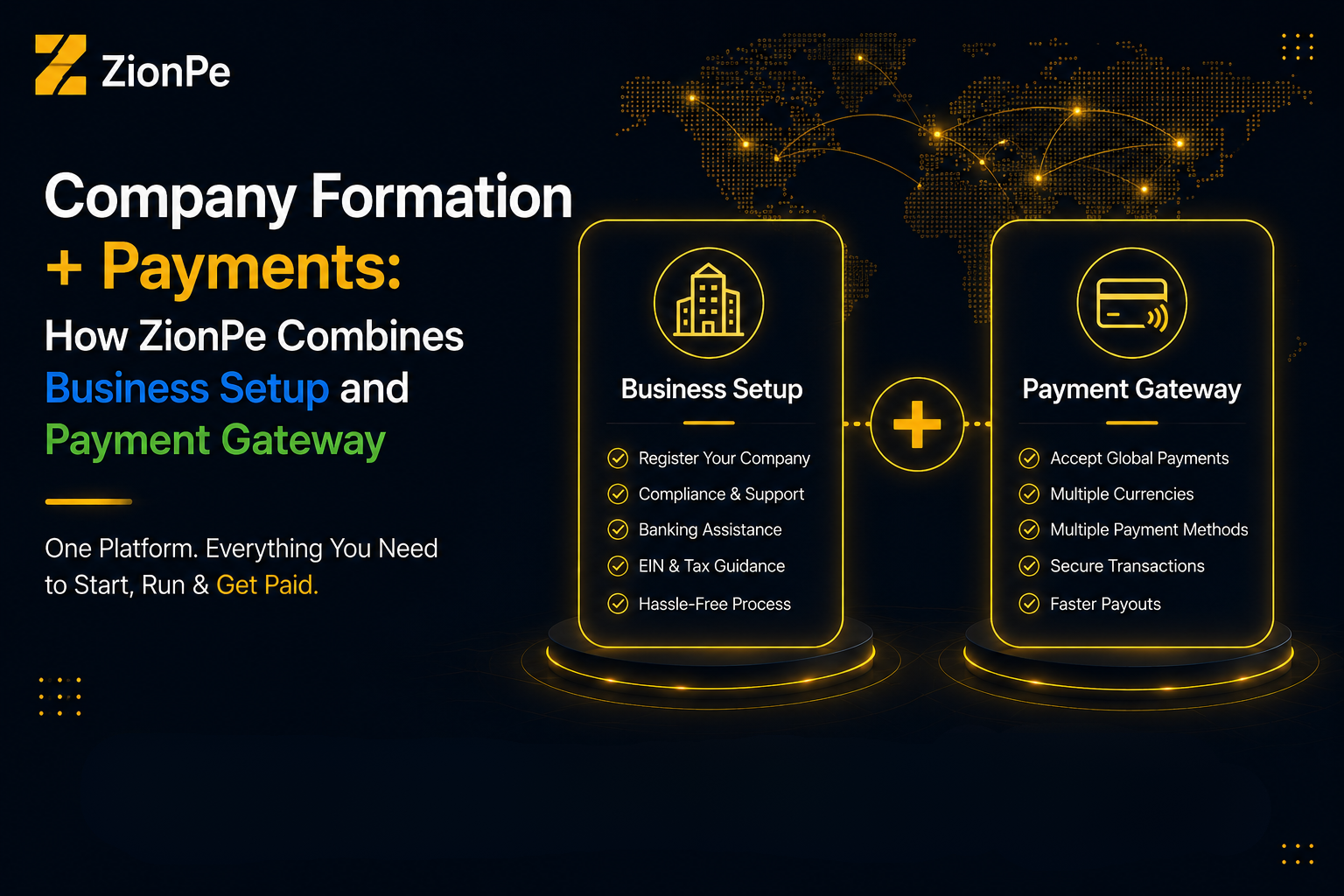
Instead of offering company formation alone, ZionPe combines:
- Company setup services
- Payment gateway access
- Online invoicing
- Payment links
- WooCommerce & WHMCS integrations
This allows founders to move from registration → revenue faster.
11. Who This Matters Most For
This matters especially for:
- Global founders & non-residents
- Freelancers and consultants
- SaaS startups
- E-commerce sellers
- Remote agencies
If your business earns money online, formation alone is never enough.
12. Final Thoughts
Company formation is essential but it’s only the foundation. For online businesses, success depends on operational readiness, payment access, and the ability to scale globally from day one.
Founders who stop at registration often face delays, lost revenue, and unnecessary stress. Those who combine company formation with payments, invoicing, and compliance start faster and grow stronger.
ZionPe bridges this gap by helping online businesses go beyond paperwork and become fully operational, payment-ready, and global from the start.