.svg)

Introduction:
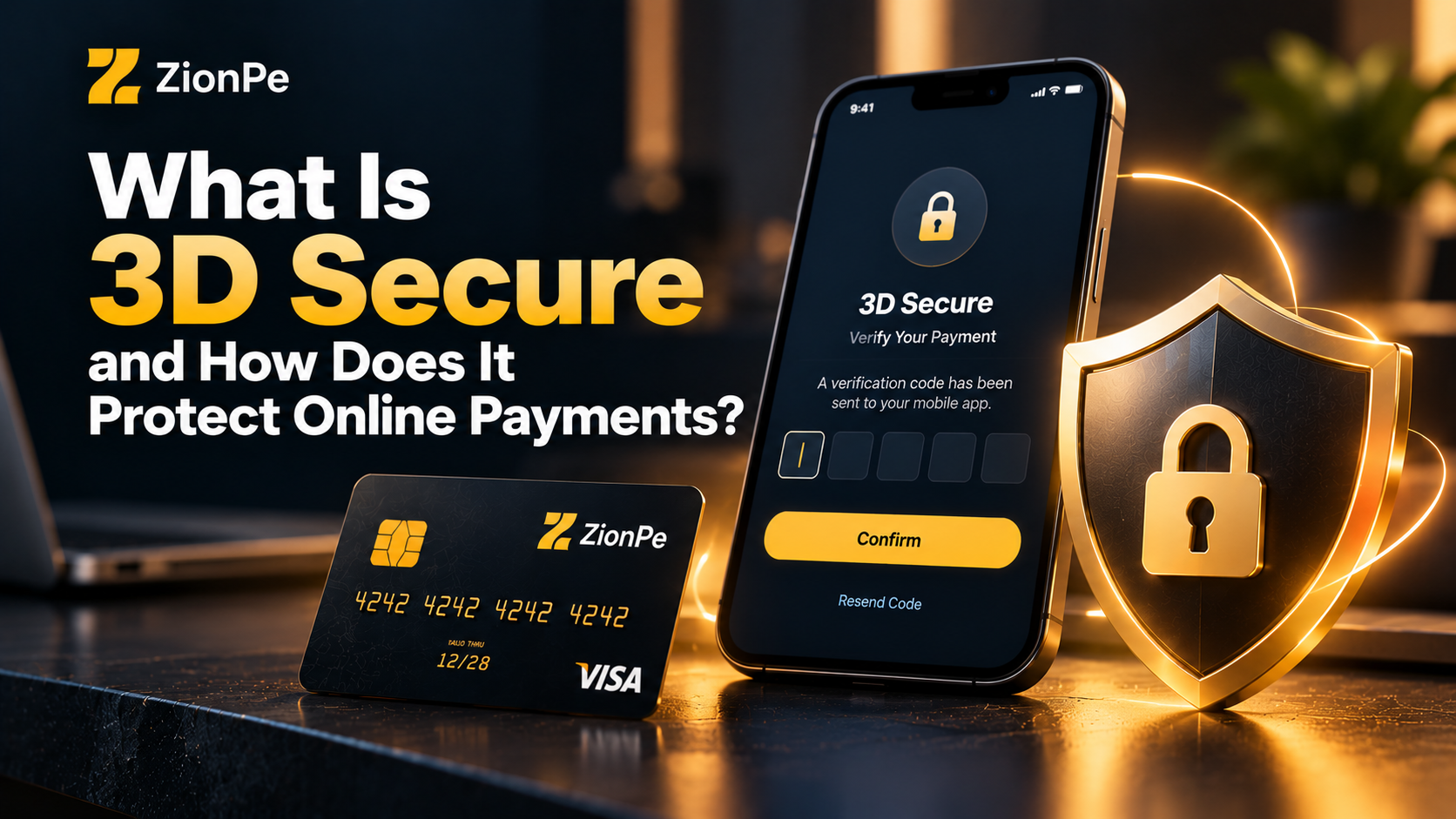
Online payments have become an essential part of modern commerce. From purchasing products from an e-commerce store to paying a subscription, invoice, or digital service, customers expect transactions to be fast, convenient, and most importantly secure. As online payment fraud continues to be a concern for businesses and consumers, payment providers have introduced additional layers of authentication to verify that the person making a transaction is actually the legitimate cardholder. One of the most widely used technologies for this purpose is 3D Secure (3DS). But what exactly is 3D Secure, how does it work, and how does it protect online payments?
What Is 3D Secure?
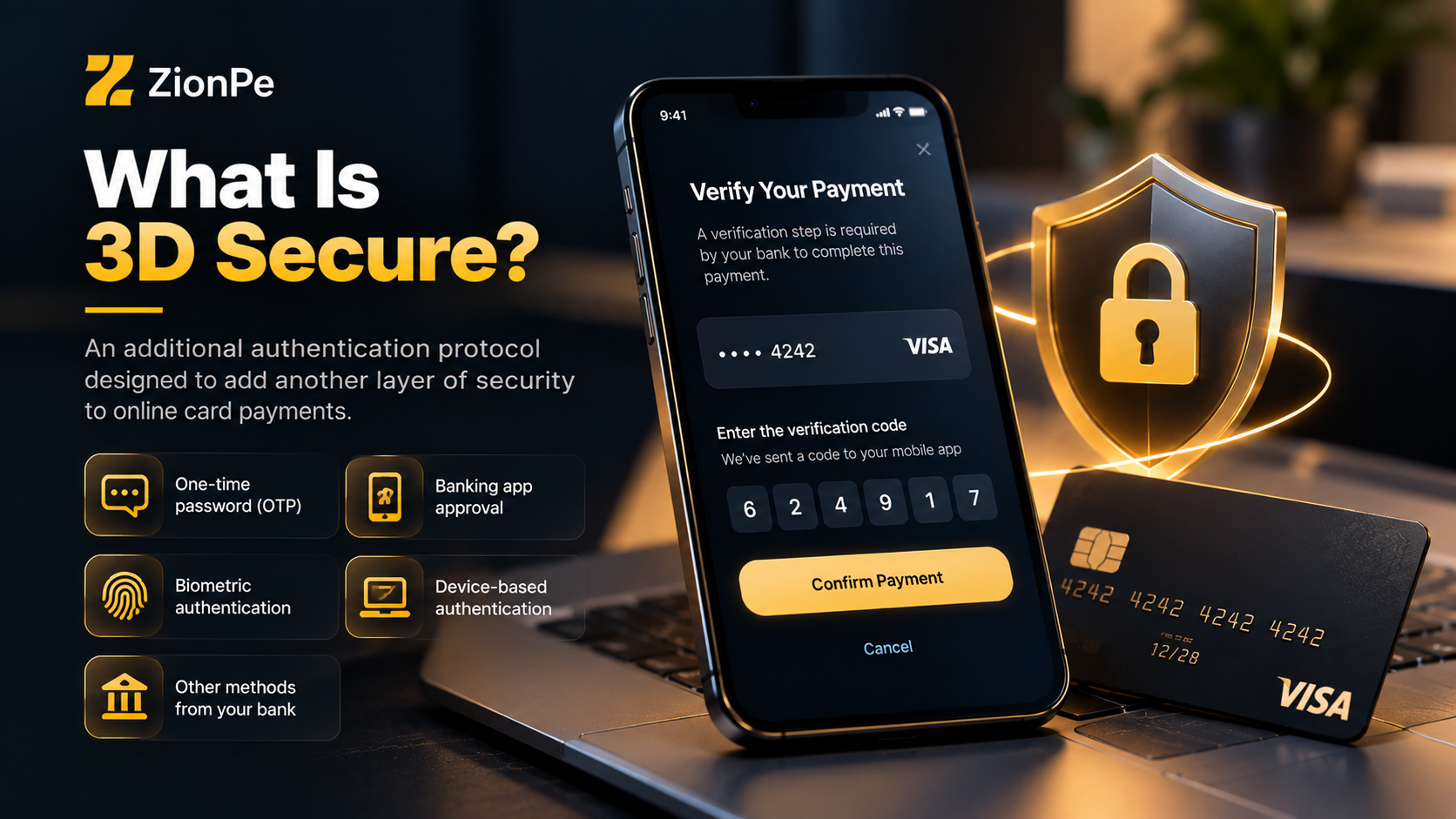
3D Secure is an additional authentication protocol designed to add another layer of security to online card payments.
The technology helps verify the identity of a customer during an online transaction. Instead of relying only on card information such as the card number, expiration date, and security code, a 3D Secure transaction can require the customer to complete an additional authentication step.
Depending on the card issuer and transaction, this could involve:
• A one-time password or verification code
• Approval through a banking application
• Biometric authentication
• Device-based authentication
• Other authentication methods provided by the customer's bank The objective is straightforward:
make it more difficult for someone using stolen card information to complete an unauthorized online purchase.
Why Is 3D Secure Important for Online Payments?
Traditional card payments can sometimes rely primarily on information printed on or associated with the card. If criminals obtain enough of that information, they may attempt to use it for unauthorized online purchases.
3D Secure introduces an additional verification layer.
For example:
imagine a customer purchases a £500 product online. The payment system may determine that additional authentication is required. The customer is then asked to verify the transaction through their bank or another approved authentication method.
If the authentication succeeds, the payment can continue.
If the authentication fails, the transaction may be declined or stopped.
This additional step can help businesses reduce exposure to certain types of card-not-present fraud.
How Does 3D Secure Work?
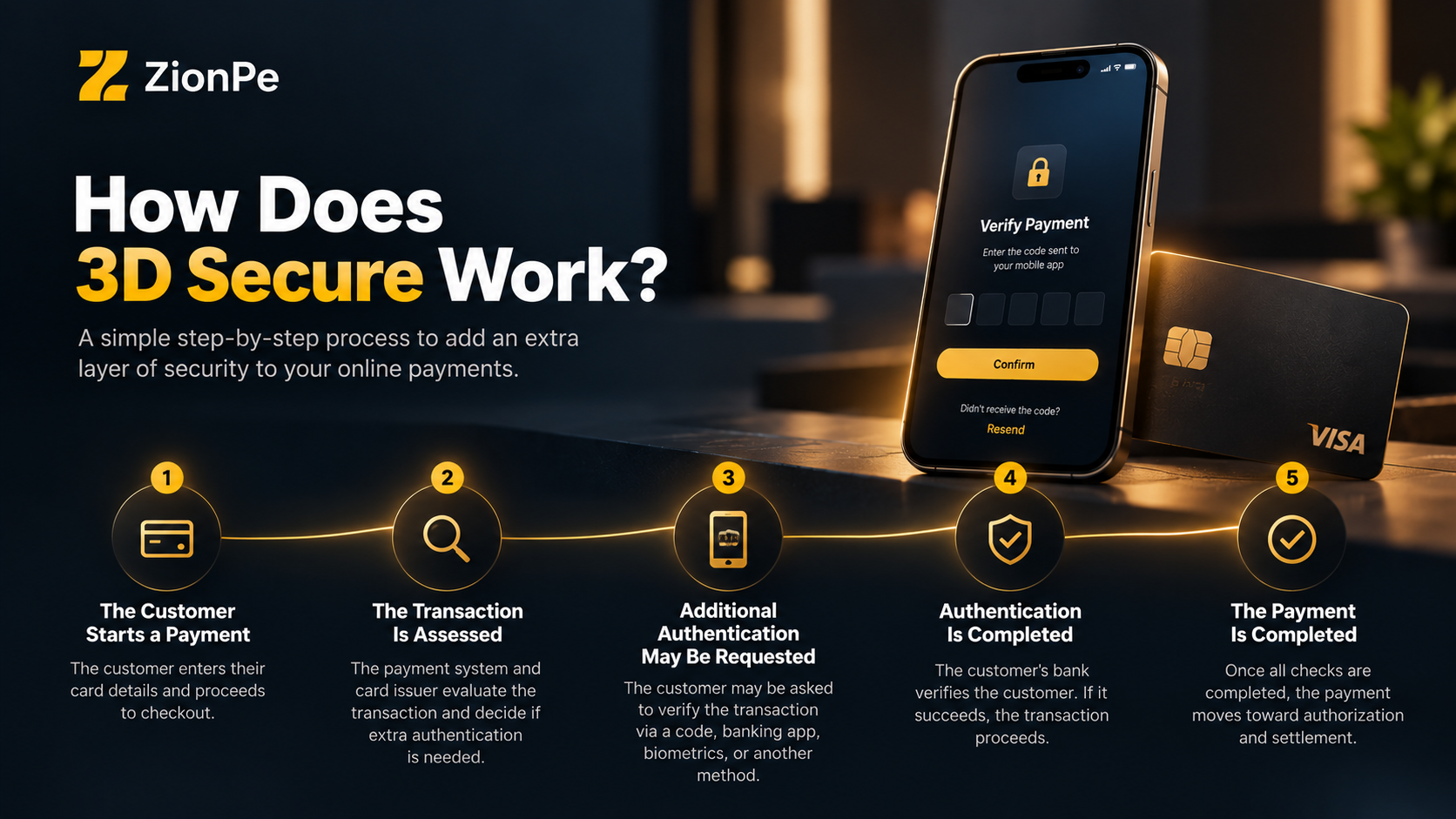
Although the technical implementation can vary between payment providers, the customer experience generally follows a simple process.
Step 1:
The Customer Starts a Payment The customer visits an online store, enters their payment information, and proceeds to checkout.
For example:
they may enter:
• Card number
• Expiration date
• Security code
• Billing information The payment request is then sent through the payment infrastructure.
Step 2:
The Transaction Is Assessed The payment system and card issuer evaluate the transaction and determine whether additional authentication is necessary.
Factors can include transaction information, the card, merchant information, and other available risk signals.
Not every transaction necessarily requires the same level of customer interaction.
Step 3:
Additional Authentication May Be Requested If authentication is required, the customer may be asked to verify the transaction.
Depending on the bank and authentication setup, this could involve a banking app, verification code, biometric authentication, or another authentication method.
Step 4:
Authentication Is Completed The customer's bank or authentication provider verifies the customer.
If the authentication succeeds, the transaction proceeds through the normal payment process.
If authentication fails, the transaction may be rejected.
Step 5:
The Payment Is Completed Once the necessary checks have been completed, the payment can proceed toward authorization and settlement. For the customer, the process may take only a few additional seconds.
What Does the "3D" in 3D Secure Mean?
The name can be confusing.
The "3D" does not refer to three-dimensional graphics.
Instead, it refers to the three domains involved in the original architecture of the system:
1. Issuer domain the bank or financial institution that issued the customer's card.
2. Acquirer domain the financial institution or payment infrastructure serving the merchant.
3. Interoperability domain the infrastructure connecting the issuer and acquirer domains.
Together, these domains provide the framework through which authentication can take place during an online card transaction.
3D Secure 1 vs. 3D Secure 2
The technology has evolved considerably.
The original version, commonly referred to as 3D Secure 1, often required customers to enter a password or verification code through a separate authentication page. Modern implementations are based on 3D Secure 2 (3DS2).
3DS2 was designed to provide a more flexible and modern authentication experience. It can use additional transaction and contextual information to help determine whether authentication is necessary. This can support a smoother checkout experience because customers may not always need to complete an additional challenge.
When a challenge is required, the customer can be directed through an authentication process supported by their card issuer.
Frictionless and Challenge-Based Authentication
One important concept in modern 3D Secure is the distinction between frictionless authentication and challenge authentication.
Frictionless Authentication
With frictionless authentication, the customer may not be required to take an additional action. The available transaction information can be assessed by the relevant systems, and the payment may proceed without displaying an additional authentication screen. This can help maintain a smooth checkout experience.
Challenge Authentication
A challenge occurs when additional customer interaction is required. For example, a customer might receive a request through their banking application to approve a transaction. The customer completes the requested authentication, and the payment continues if the verification is successful. This approach provides an additional security layer while allowing legitimate customers to authenticate themselves.
How Does 3D Secure Protect Businesses?
For merchants, payment security is about more than protecting individual transactions. Fraud can create financial losses, operational costs, customer service issues, and reputational damage. 3D Secure can contribute to a broader payment-security strategy by adding cardholder authentication to eligible online transactions.
Potential benefits include:
1. Additional Cardholder Verification
3D Secure can require the customer to demonstrate that they are the legitimate cardholder rather than relying solely on card details.
2. Reduced Exposure to Certain Fraud Attempts
Stolen card details may not be sufficient to complete a transaction when additional authentication is required.
3. A More Secure Checkout
Modern 3DS implementations can integrate authentication into the payment flow rather than treating security as a completely separate process.
4. Support for Online Commerce Businesses
selling products, services, subscriptions, and digital goods can use payment infrastructure that incorporates additional authentication mechanisms into the checkout experience.
Does 3D Secure Eliminate Payment Fraud?
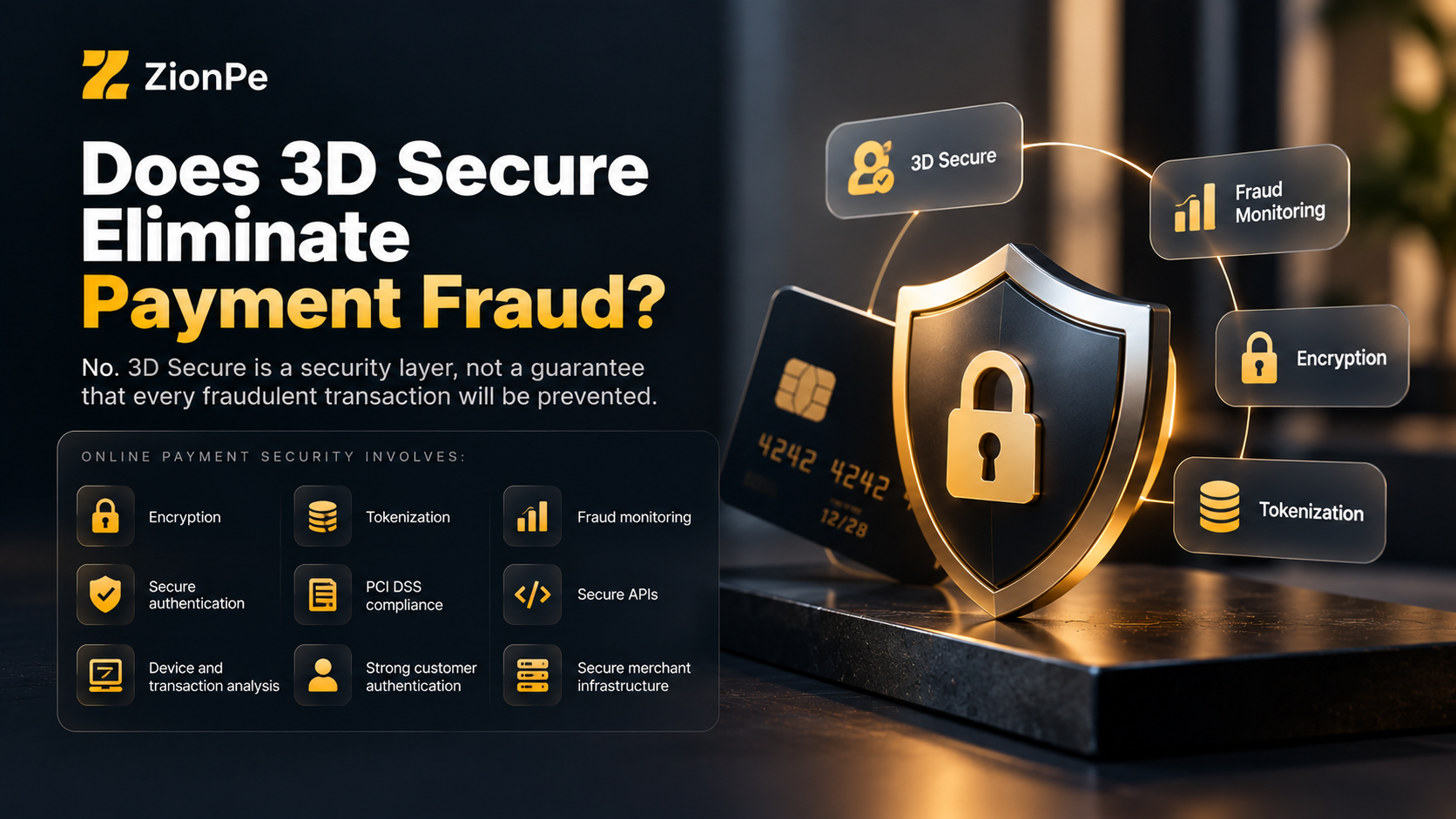
No.
This is an important distinction.
3D Secure is a security layer, not a guarantee that every fraudulent transaction will be prevented.
Online payment security involves multiple technologies and processes, including:
• Encryption
• Tokenization
• Fraud monitoring
• Secure authentication
• PCI DSS compliance
• Secure APIs
• Device and transaction analysis
• Strong customer authentication where applicable
• Secure merchant infrastructure 3D Secure should therefore be viewed as one component of a broader payment-security strategy.
Businesses should avoid treating any single technology as a complete solution for every type of payment fraud.
3D Secure and Customer Experience
Payment security must be balanced with convenience. If customers are repeatedly presented with complicated authentication steps, they may abandon their purchases.
Modern 3D Secure implementations aim to reduce unnecessary friction by allowing risk-based authentication approaches. In suitable transactions, customers may experience a relatively seamless checkout.
When additional verification is considered necessary, the customer can be asked to authenticate the payment. This balance between security and convenience is one of the key considerations for modern online payment systems.
Why Payment Security Matters for E-Commerce Businesses
For an online business, checkout is one of the most sensitive parts of the customer journey. A customer may be comfortable browsing a website, adding products to a cart, and entering personal information but hesitation at the payment stage can result in abandoned transactions. At the same time, businesses cannot sacrifice security simply to make checkout faster. A modern payment system therefore needs to address both sides of the equation: Security: Protect transactions and reduce opportunities for unauthorized payments. Convenience: Make legitimate purchases as simple and friction-free as possible. Technologies such as 3D Secure help payment providers and merchants work toward this balance.
How ZionPe Supports Secure Online Payments
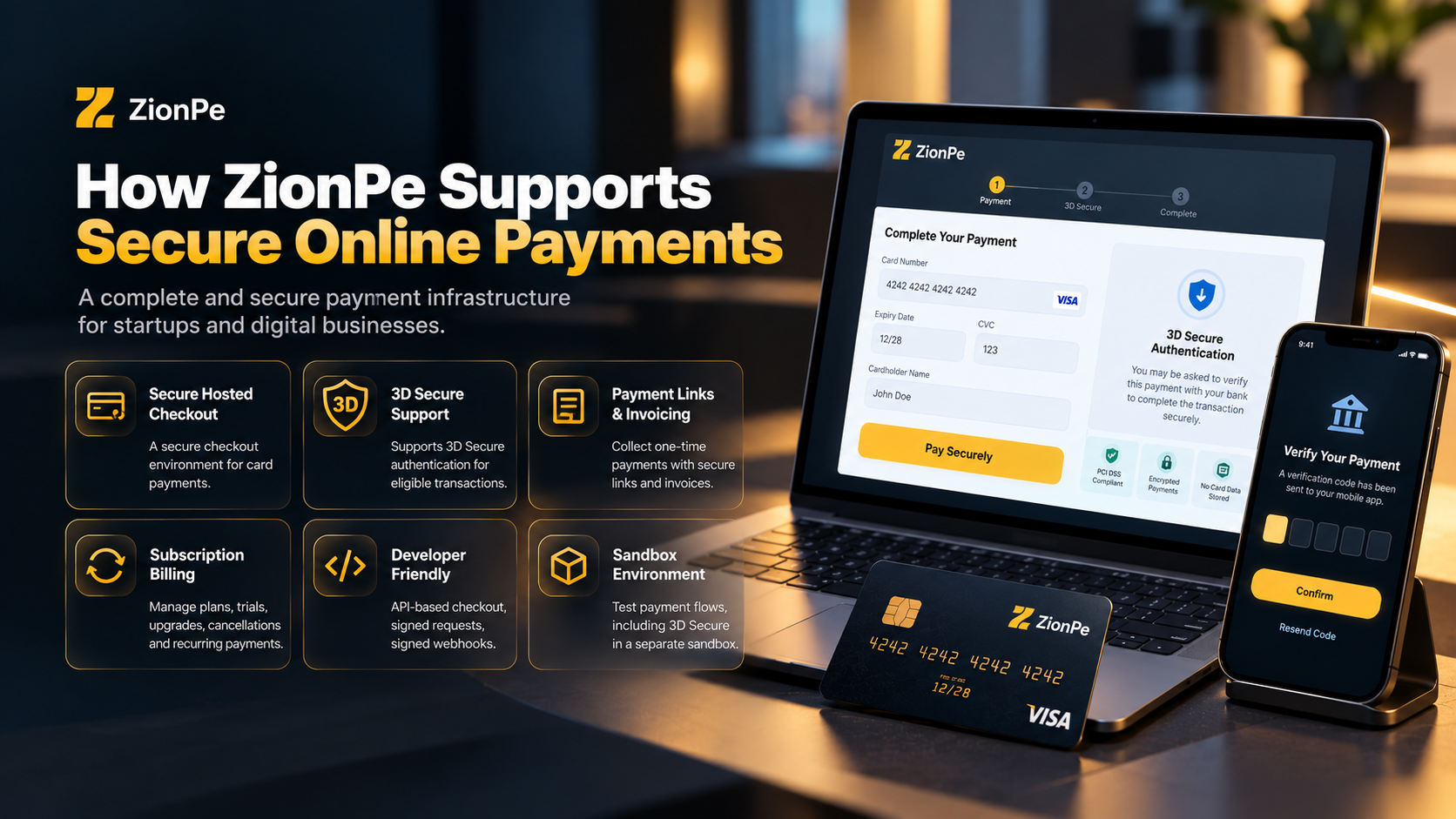
Businesses looking for an online payment platform can also consider ZionPe, a payment technology platform designed for startups and digital businesses. ZionPe provides online payment capabilities including hosted checkout, payment links, invoicing, subscription billing, and integrations for businesses. Its platform supports major card payments and provides a secure checkout environment. Importantly for businesses concerned about card-payment security, ZionPe's hosted checkout supports 3D Secure authentication. Its payment API documentation states that the hosted checkout handles 3D Secure as part of the payment flow. ZionPe also states that its checkout uses PCI-DSS compliant infrastructure, 3D Secure, and encryption, while card data is not stored on ZionPe. For developers, ZionPe also provides API-based hosted checkout, signed API requests, signed webhooks, and a sandbox environment for testing payment integrations. Businesses can therefore use ZionPe's payment infrastructure while incorporating additional security measures into their online payment experience.
3D Secure for Subscription and Recurring Payments
Subscription businesses face a slightly different payment challenge. Instead of processing one transaction, a business may need to collect payments repeatedly over months or years. A secure payment infrastructure can help businesses manage recurring payments while maintaining appropriate authentication and payment controls. ZionPe offers subscription billing capabilities that allow businesses to manage plans, trials, upgrades, cancellations, recurring payments, and payment retries from its platform. For businesses operating subscription models, payment security therefore becomes part of the entire customer lifecycle rather than just the initial checkout.
What Should Businesses Look for in a Secure Payment Platform?
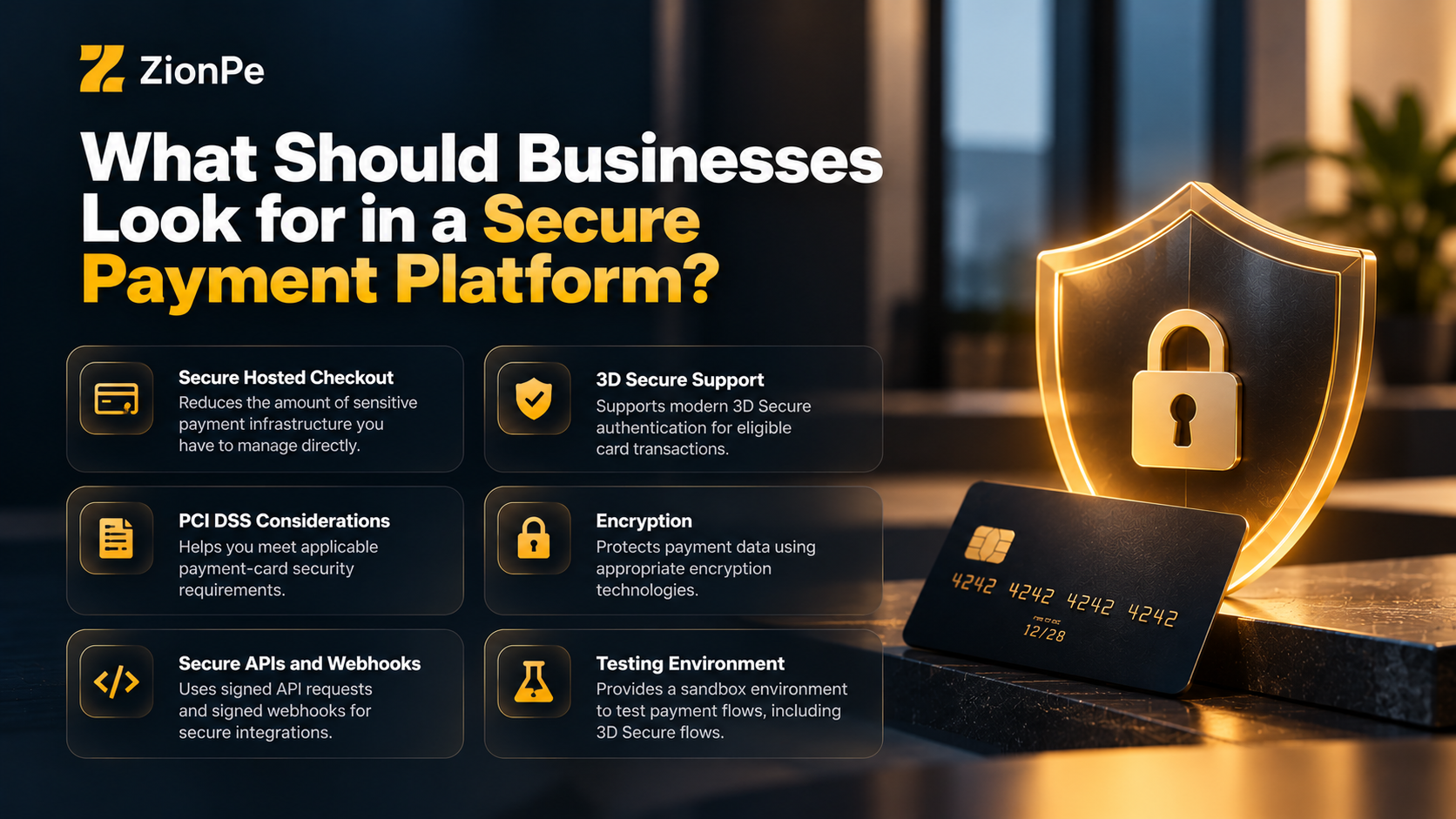
3D Secure is valuable, but businesses should look beyond one security feature when selecting a payment provider.
Consider whether the platform provides:
Secure Hosted Checkout
A hosted checkout can reduce the amount of sensitive payment infrastructure a business has to manage directly.
3D Secure Support
Check whether the payment platform supports modern 3D Secure authentication for eligible card transactions.
PCI DSS Considerations
Businesses should understand how their payment provider helps them meet applicable payment-card security requirements.
Encryption
Payment data should be protected using appropriate encryption technologies throughout relevant parts of the payment process.
Secure APIs and Webhooks
For businesses integrating payments into websites and applications, API authentication and webhook verification are also important. ZionPe, for example, uses signed API requests and signed webhooks as part of its developer payment infrastructure.
Testing Environment
A sandbox environment allows developers to test payment flows before accepting real transactions.
ZionPe provides a separate sandbox environment for testing payment integrations and specifically documents testing for 3D Secure flows.
Final Thoughts
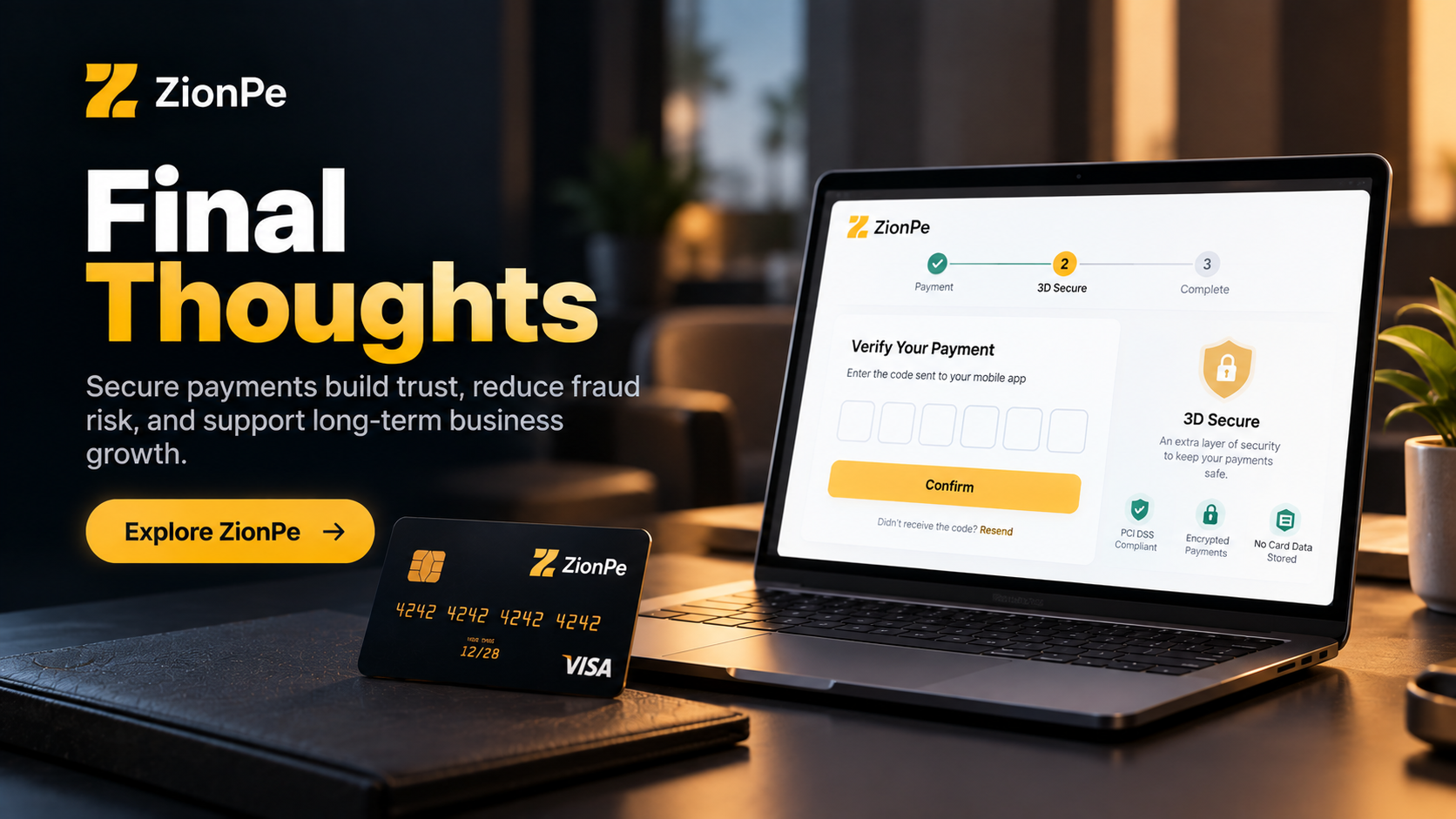
Online payment security has evolved significantly as e-commerce has grown. Customers want fast checkout experiences, while businesses need effective safeguards against unauthorized transactions. 3D Secure provides an additional authentication layer that helps verify cardholders during online payments.
Modern 3D Secure implementations can combine risk-based assessment with customer authentication, allowing some transactions to proceed with minimal friction while requesting additional verification when necessary. However, 3D Secure should not be considered a standalone fraud-prevention solution. Strong payment security generally requires multiple layers, including secure infrastructure, encryption, authentication, fraud controls, and appropriate compliance practices.
For businesses searching for payment infrastructure with built-in security capabilities, ZionPe offers hosted online checkout with 3D Secure support, alongside payment links, invoices, subscription billing, APIs, and integrations. As online commerce continues to expand, investing in secure payment infrastructure is not simply a technical consideration it is an important part of building customer trust and maintaining a reliable digital business. Ready to explore secure online payments? Visit ZionPe to learn more about its payment and checkout solutions.