.svg)

A practical guide for business owners, finance teams, and online sellers
Introduction
Every business that accepts payments faces risk. It does not matter if you run a small online store, a service company, or a growing global brand. Sooner or later, someone will try to use your payment system in a way it was never meant to be used.
The good news is that most suspicious activity leaves clues. A strange payment here, an odd pattern there. When you know what to look for, you can stop a small issue before it turns into lost money, damaged trust, or trouble with banks and regulators.
This guide explains the most common warning signs, how to spot them early, and what steps you can take to protect your business.
Why Early Detection Matters
Many business owners only notice a payment problem after the damage is done. By then, the money is gone, a customer is upset, and the bank may be asking questions.
Acting early has clear benefits:
- Lower financial loss. Stopping one bad payment is far cheaper than recovering from many.
- Fewer chargebacks. Disputes cost you the sale, the product, and an extra fee.
- Better standing with payment providers. Too many problem payments can lead to account limits or even closure.
- Stronger customer trust. Customers feel safe when they know you take security seriously.
In short, a small amount of attention today can save a large amount of stress later.
Common Warning Signs of Suspicious Payments
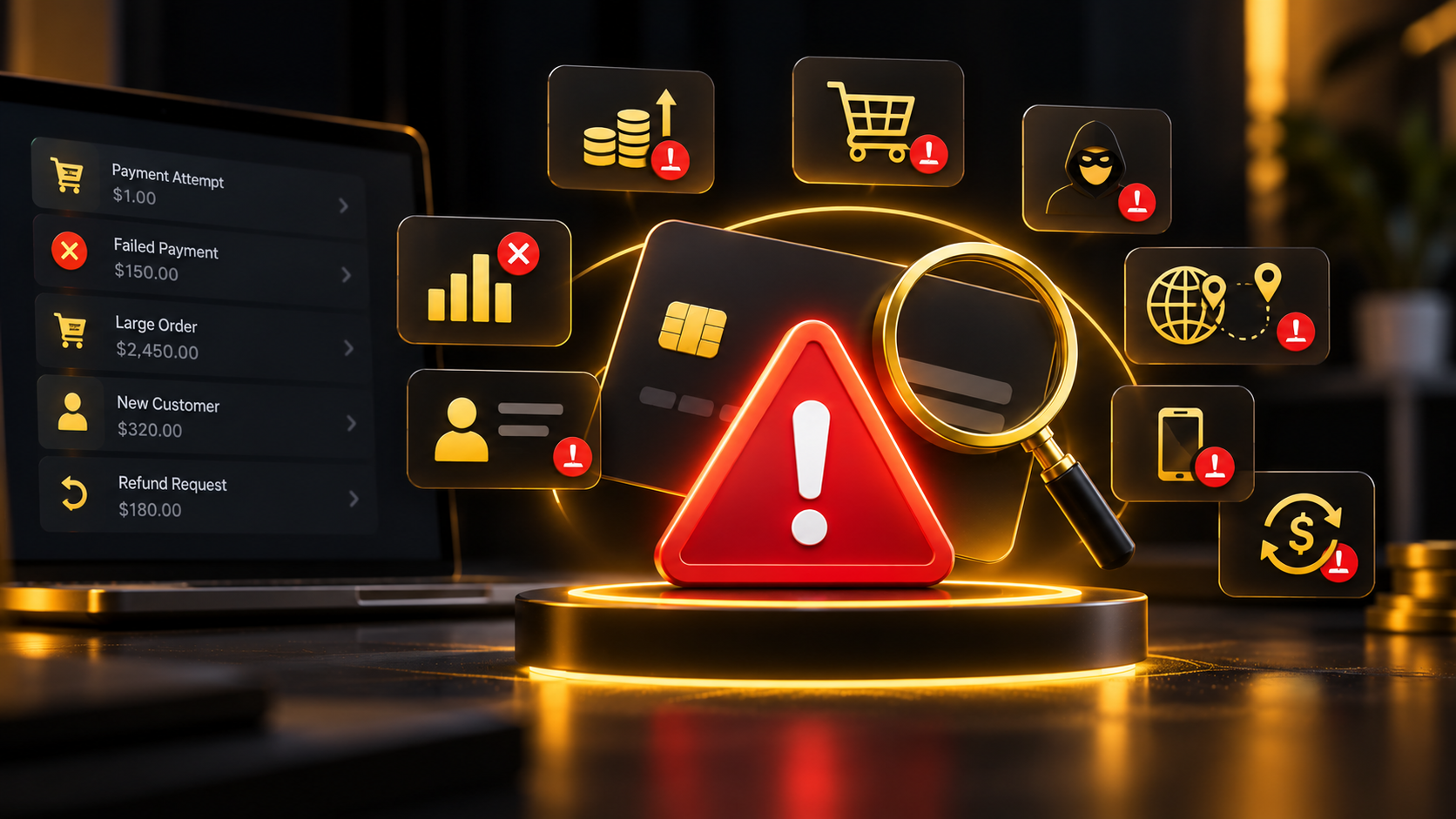
No single sign proves that something is wrong. But when you see several of them together, it is time to look closer.
1. Many Small Payments in a Short Time
Someone testing stolen card details will often make several small purchases first. They want to see if the card works before trying a bigger amount. If you see a burst of low-value payments from the same person, device, or location, treat it with care.
2. Repeated Failed Attempts
A customer may fail once or twice by mistake. But five, ten, or twenty failed attempts in a row is not normal. This often points to someone guessing card numbers or security codes.
3. Unusually Large Orders From New Customers
A first-time buyer placing a very large order deserves a second look. This is even more true if the order includes items that are easy to resell, or if the buyer asks for fast shipping without caring about the cost.
4. Mismatched Details
Check whether the information fits together. Warning signs include:
- The billing address is in one country, but the shipping address is in another.
- The email address looks random or was created very recently.
- The name on the card does not match the name on the order.
- The phone number does not match the stated location.
5. Payments at Odd Times
If most of your customers buy during the day and suddenly many orders arrive at 3 a.m., ask why. Fraud attempts are often automated and do not follow normal shopping hours.
6. Several Orders Using One Card or Device
When many different accounts use the same card, or many cards are used from the same device or internet address, something may be off. This is a common sign of organized misuse.
7. Sudden Changes in Account Behavior
A customer who pays small amounts every month and suddenly makes a very large payment, changes bank details, or asks to send money to a new account should be reviewed. Sudden change is one of the strongest signals in any payment system.
8. Requests for Refunds to a Different Method
A common trick is to pay with one card and then ask for a refund to another account or through a different method. A refund should almost always go back to the original payment source.
Warning Signs Inside Your Own Business
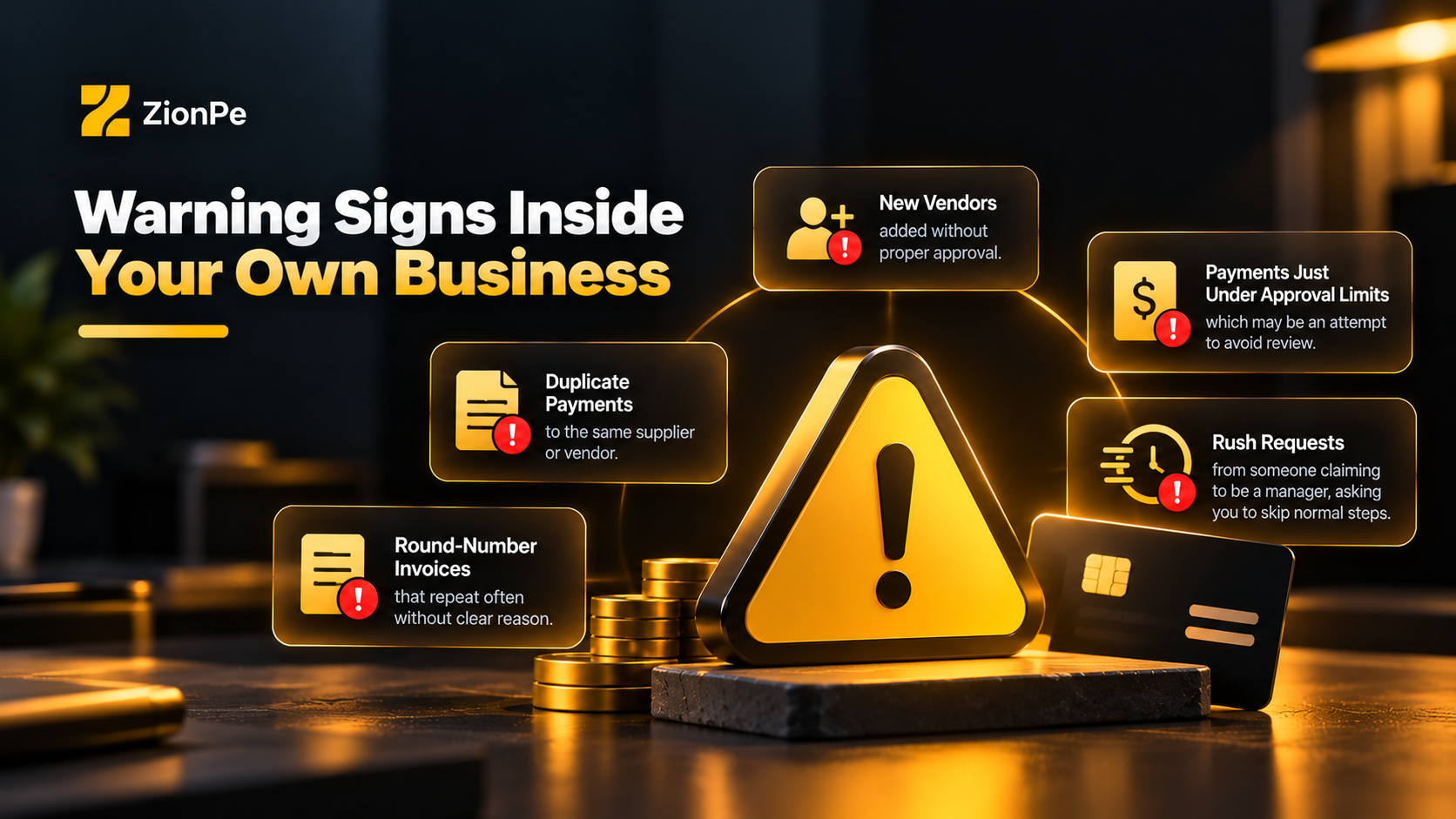
Not all risk comes from outside. Sometimes the problem is inside the payment process itself. Watch for:
- Duplicate payments to the same supplier or vendor.
- New vendors added without proper approval.
- Payments just under approval limits, which may be an attempt to avoid review.
- Round-number invoices that repeat often without clear reason.
- Rush requests from someone claiming to be a manager, asking you to skip normal steps.
The last one is very common. Fraudsters often pretend to be senior staff and create pressure so that people act before they think. Any urgent request to change bank details or send money quickly should be checked by a second person, using a trusted phone number or channel.
How to Build a Simple Detection Process
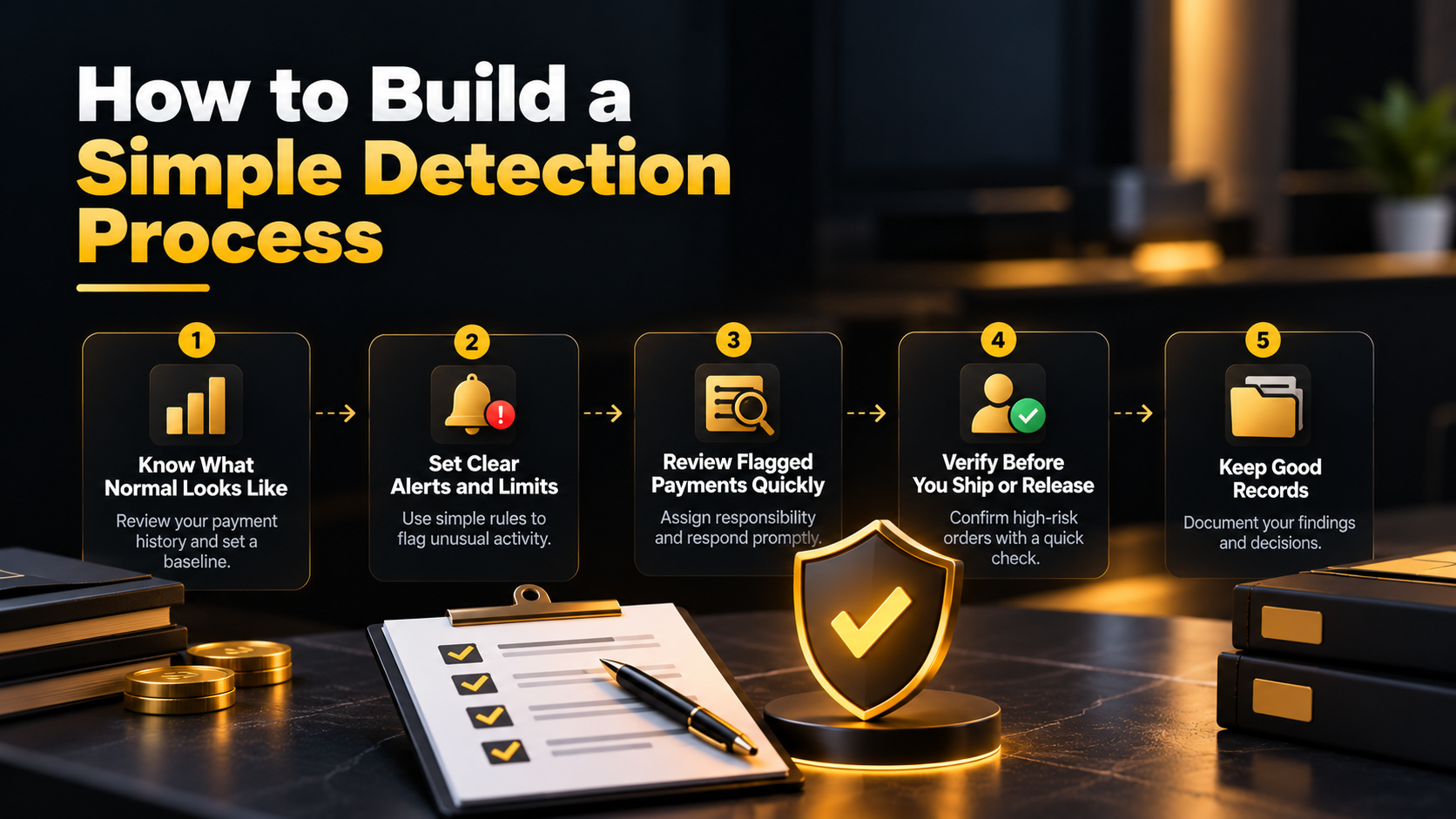
You do not need a large team or expensive tools to get started. A clear process is often enough.
Step 1: Know What Normal Looks Like
You cannot spot unusual activity if you do not know what usual activity looks like. Review your payment history and note your average order size, your busiest hours, your main customer locations, and your typical refund rate. This becomes your baseline.
Step 2: Set Clear Alerts and Limits
Most payment platforms let you set rules. Useful ones include:
- Alerts for orders above a certain amount
- Limits on the number of attempts per card or per hour
- Flags for mismatched billing and shipping countries
- Alerts for sudden jumps in refund or chargeback numbers
Start with simple rules and adjust them over time.
Step 3: Review Flagged Payments Quickly
An alert is only useful if someone acts on it. Decide who is responsible for checking flagged payments and how fast they should respond. Even a short daily review can make a big difference.
Step 4: Verify Before You Ship or Release Funds
For high-risk orders, take a few extra minutes. Send a short email or make a call to confirm the order. Ask for simple proof of identity if needed. Real customers rarely mind, and fraudsters often disappear at this point.
Step 5: Keep Good Records
Write down what you find and what you decide. Good records help you spot repeat patterns, support any dispute with a bank, and show regulators that you take your duties seriously.
The Role of Technology
Modern tools can do a lot of the heavy work. Many payment providers now include fraud scoring, which gives each payment a risk rating based on many factors. Other helpful tools include:
- Address and card security checks, which compare the details entered with what the bank has on file.
- Two-step verification, which adds an extra layer for logins and large payments.
- Device and location tracking, which notices when the same device is behind many accounts.
- Automated monitoring, which reviews payments around the clock and flags anything unusual.
Technology works best when combined with human judgment. A system can flag a payment, but a trained person can often tell whether it is truly a problem.
Train Your Team
Your staff is your first line of defense. Make sure everyone who touches payments understands the basics:
- What suspicious activity looks like
- Who to tell when something seems wrong
- Which steps must never be skipped, even when someone is in a hurry
Short, regular training sessions work better than one long meeting. Share real examples, and encourage people to speak up. No one should feel embarrassed for raising a concern that turns out to be harmless.
What to Do When You Find Something Suspicious
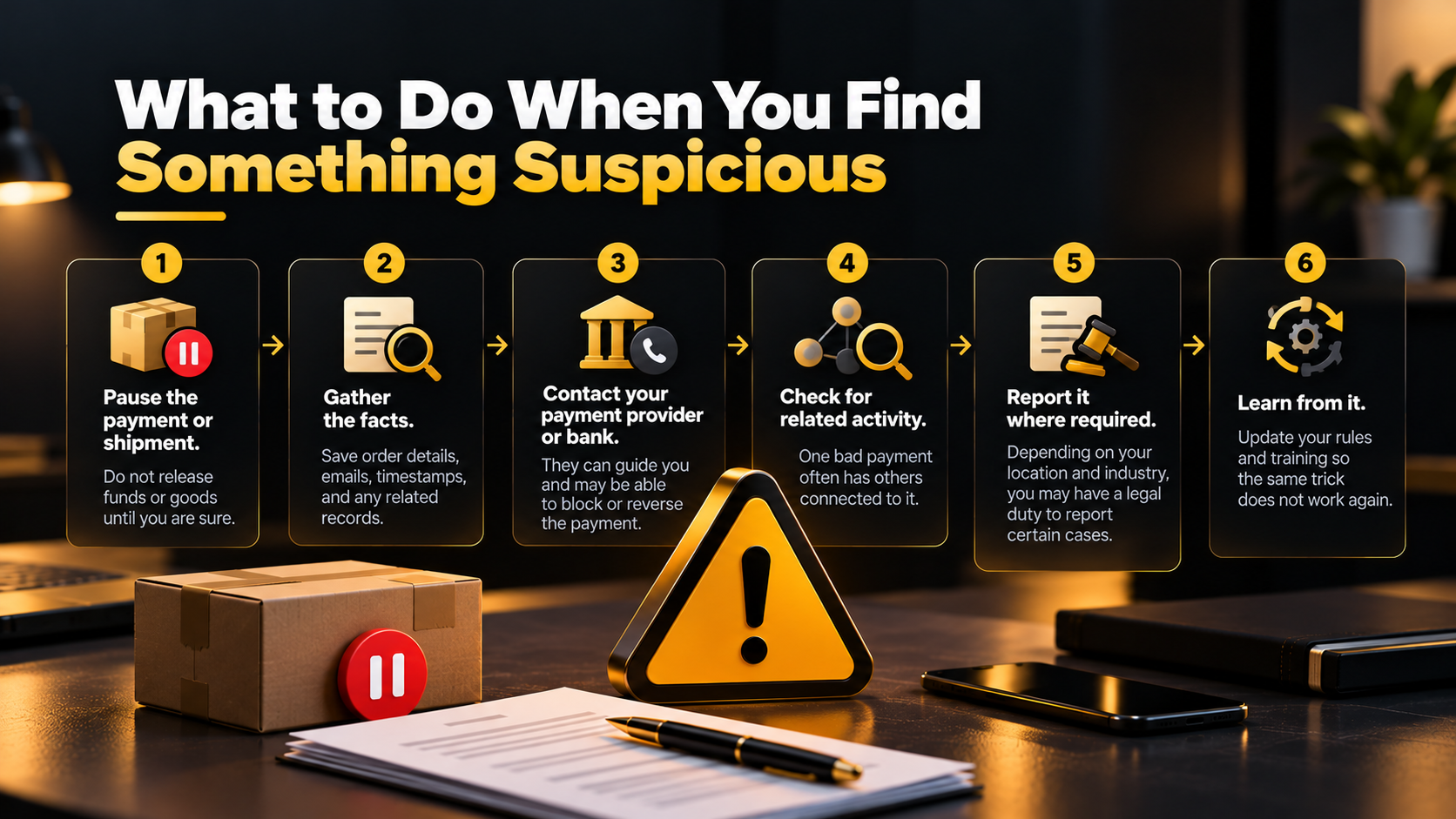
If a payment looks wrong, stay calm and follow a simple plan:
- Pause the payment or shipment. Do not release funds or goods until you are sure.
- Gather the facts. Save order details, emails, timestamps, and any related records.
- Contact your payment provider or bank. They can guide you and may be able to block or reverse the payment.
- Check for related activity. One bad payment often has others connected to it.
- Report it where required. Depending on your location and industry, you may have a legal duty to report certain cases.
- Learn from it. Update your rules and training so the same trick does not work again.
Final Thoughts

Suspicious payment activity is part of doing business today, but it does not have to catch you by surprise. By learning the common warning signs, setting clear rules, using helpful tools, and training your team, you can find problems early and keep them small.
The key idea is simple: know what normal looks like, notice when something changes, and act quickly. Businesses that make this a habit protect their money, their reputation, and the customers who trust them.
Start small. Review your payments this week, set up a few basic alerts, and talk to your team about what to watch for. A little effort now can prevent a much bigger problem later.
Disclaimer: All images used in this blog are AI-generated for illustrative purposes only. They are intended to support the content and may not represent real-life situations.